Why Vintage Rolex Collectors Choose Oysters Jubilee for 78360 Bracelets
Sourcing a period-correct 78360 for a vintage Rolex restoration is harder than it should be. Original 78360 bracelets surface on the secondary market with stretch, scratches, or mismatched end links. We solve that problem by manufacturing new 78360 bracelets directly, with three commitments that define every component we produce.
Precision Manufacturing to Period-Correct Specifications
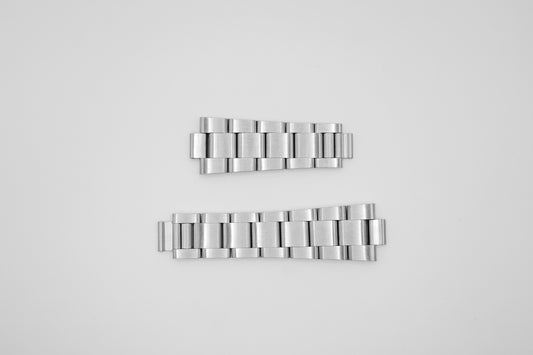
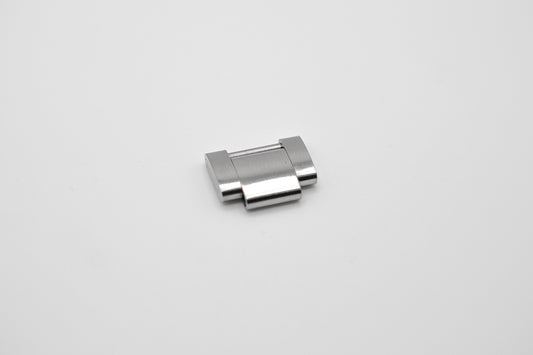
We precision machine each 78360 Oyster bracelet to match documented vintage dimensions from the mid-1970s through 1999 production period. Hollow link construction in 316L stainless steel delivers the geometry, weight, and articulation of period-accurate components. Every bracelet ships new, with consistent tolerances across batches. Buyers receive a component built to period-correct specifications, not a used part with unknown wear history.
Complete Compatibility Coverage Across Vintage Sport Models
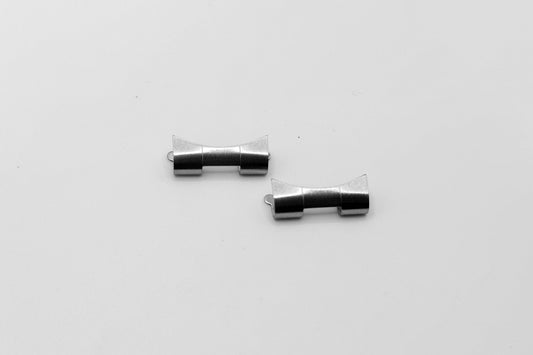
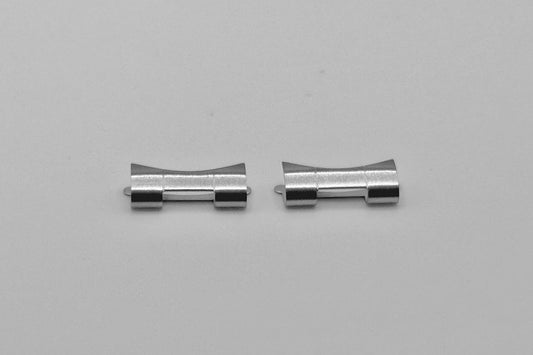
The 78360 fits a wide range of vintage Rolex sport references across multiple model families, owed to its two-decade-plus production span and Rolex's standardization on the 20mm case across multiple model families during that period. A single bracelet body covers the GMT-Master, GMT-Master II, Explorer I, Explorer II, Daytona, Milgauss, and Datejust lineages. The variable is the end link code, which shifts with case geometry across production years. We manufacture every end link variant alongside the bracelet itself, so a buyer can configure the correct assembly for any compatible reference.
Built for Restoration-Grade Fit on 20mm Vintage Rolex Sport Watches
Every 78360 we produce is engineered for flush fitment against 20mm Rolex sport cases, in both drilled-lug and no-holes configurations. Our manufacturing process accounts for the specific lug geometry of each compatible reference, ensuring the bracelet seats properly without gaps. Spring bar holes are sized for standard 1.8mm vintage Rolex spring bars. Restoration-grade fitment means the bracelet looks correct, sits correctly, and wears correctly on the watch it was machined for.
Watch Model Compatibility for the 78360 Oyster Bracelet
The 78360 Oyster bracelet fits a specific group of Rolex sport references produced from the mid-1970s onward. Compatibility depends on three factors: case reference, lug width, and end link code. The 78360 covers 20mm cases across multiple model families, with end link variants for both drilled-lug and no-holes configurations. Identifying the correct configuration for your watch starts with knowing your case reference and case type.
Compatible Rolex GMT-Master, Explorer, Daytona, and Datejust References
The 78360 is compatible with the following vintage Rolex sport references:
Each reference requires a specific end link code matched to the case lug geometry. The same 78360 bracelet body pairs with different end link codes depending on the watch.
How to Identify the Correct End Link for Your Vintage Rolex
To identify the correct end link for your vintage Rolex, start with the case reference number engraved between the lugs at 12 o'clock. Then check the production period: case geometry shifted across years, and end link codes shifted with it. The GMT-Master 1675 produced from 1976-1980 takes 580 end links; the GMT-Master 16700 produced from 1988-1999 takes 501B end links — same 78360 bracelet body, different end link for the updated case profile.
78360 End Link Options — 558, 558B, 580, 501, 501B, and 503
The 78360 bracelet pairs with six distinct end link codes covering its full compatibility range. The end link is the small metal piece that seats between the bracelet and the case, and ordering the correct code is critical for proper fitment. Below is the complete pairing reference:
Ordering the wrong end link code creates fitment gaps between the case and bracelet. Confirm your reference and case type before selecting.
View the Full Rolex Compatibility Chart
Installation Guidance and Related Vintage Rolex Components
Installing a 78360 Oyster bracelet on a vintage Rolex involves removing the existing bracelet, fitting the correct end links to the case, and securing the assembly with appropriately sized spring bars. The work is precise but accessible. For collectors comfortable with watch tools, it is a manageable home project. For those new to bracelet installation, professional service is the safer route.
Professional Installation Recommended for Vintage Sport Watch Restoration
We recommend professional installation for vintage Rolex sport watch restoration when the watch has significant collector value or the case shows wear that complicates spring bar removal. A watchmaker can verify case condition, install the correct spring bars, and confirm proper end link seating without risking case damage. Restoration-grade installation protects both the new 78360 bracelet and the case it sits on.
Complete Your Restoration with End Links, Clasps, and Spring Bars
Most 78360 buyers need additional components alongside the bracelet body. End links must match the case reference, spring bars must be sized for vintage drilled lugs, and clasp components occasionally need replacement during restoration. We manufacture each part to the same period-correct specifications as the 78360 bracelet itself. Three configurations cover most vintage Rolex sport watch buyers.
Order the 78360 + 558B End Link Bundle for No-Holes Cases
The 78360 with 558B end links is the correct complete assembly for Explorer I 14270 and Datejust 16220/16234 no-holes production. The 558B end link is notched for cases without drilled lug holes, providing flush seating where standard 558 end links would not fit. The notched profile also makes the 558B backward-compatible with drilled-lug cases, giving collectors flexibility across mixed reference sets. Order the complete assembly to receive both components pre-paired and ready for installation.
Order the 78360 + 501B End Link Bundle for Later GMT and Explorer II
The 78360 with 501B end links is the correct Oyster configuration for GMT-Master 16700, GMT-Master II 16710 and 16760, and Explorer II 16550 and 16570. These references share updated case lug geometry that pairs with the 501B code rather than the earlier 580 end link. See the dedicated GMT-Master 16700 bracelet page for the pre-matched assembly.
Browse All Vintage Rolex GMT-Master Bracelets and Components
Collectors maintaining multiple vintage GMT-Master references benefit from our complete bracelet ecosystem covering every production year from 1959 through 1999. The GMT-Master hub lists every Oyster and Jubilee configuration we manufacture for the 1675, 16750, 16700, 16710, and 16760, with matched end link pairings and side-by-side comparisons between Oyster and Jubilee options for each reference.
View the Full Rolex Compatibility Chart
Choosing the Right 78360 for Your Vintage Rolex Restoration
The 78360 is one of the longest-running Oyster bracelet references in Rolex history, produced from the mid-1970s through the late 1990s across multiple sport model families. Selecting the correct configuration for your restoration starts with the bracelet body itself and then narrows to the matching end link code for your specific case reference.
Period-Correct Match for Vintage Rolex Sport Watches (Mid-1970s Onward)
Rolex introduced the 78360 in the mid-1970s as the solid-link successor to the folded-link 7836 Oyster bracelet. The reference remained in production for over two decades, spanning the transition from early hollow-link construction to later refinements in clasp design and end link geometry. Buyers restoring a watch from this period-correct production window match the bracelet to the case production period for accurate restoration of an iconic vintage Rolex sport watch. Milgauss-specific configurations are documented on the Milgauss bracelet page.
Also Fits Vintage Tudor Chronograph 79180 and 79160
The 78360 bracelet also fits Vintage Tudor Chronograph references 79180 and 79160 produced from 1993 to 1995. Both Tudor Chronograph models use 589 end links — a Tudor-specific code that does not cross-reference with the Rolex end link codes listed above. Tudor collectors restoring these references should verify the 589 end link pairing on the Tudor Compatibility Chart before ordering.