
Rolex Oyster Bracelets

-
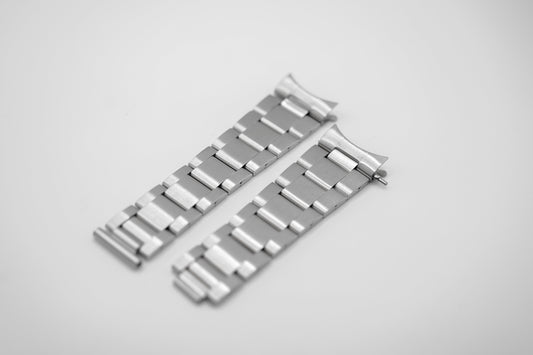
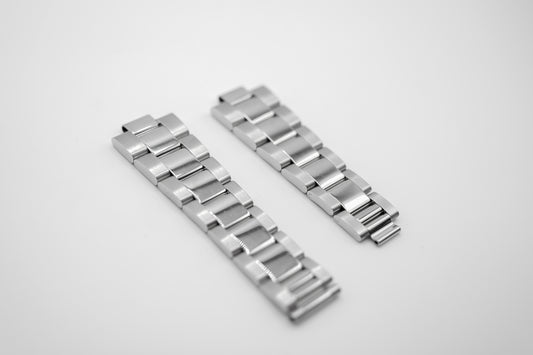
Oyster Bracelet Folded Links Reference 7836 for Rolex
Regular price $807.82 USDRegular priceUnit price per -
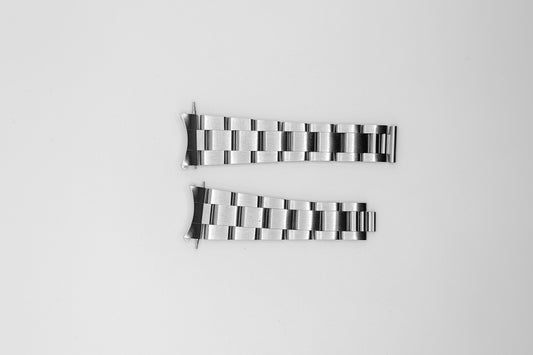
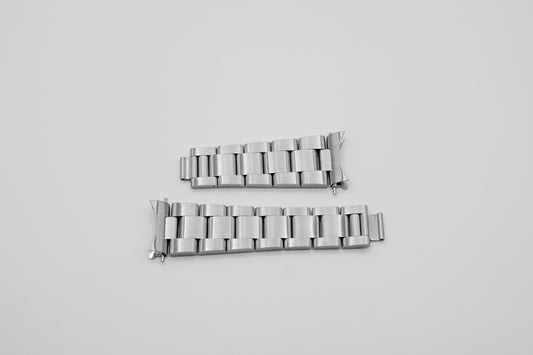
Oyster Bracelet 78790 with 558B End Links for Rolex
Regular price $412.76 USDRegular priceUnit price per -
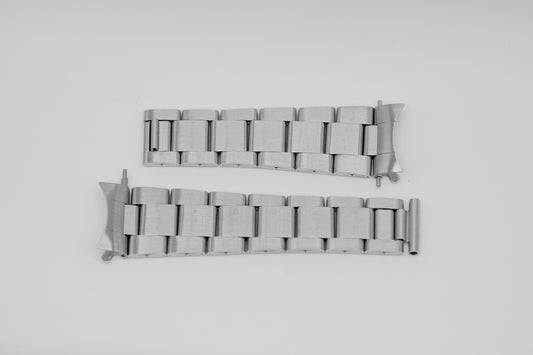
Oyster Bracelet 78390 with 503B End Links for Rolex
Regular price $489.07 USDRegular priceUnit price per -
Oyster Bracelet 78360 with 503 End Links for Rolex
Regular price $412.76 USDRegular priceUnit price per -
Oyster Bracelet 7836 with 358 End Links for Tudor
Regular price $841.24 USDRegular priceUnit price per -
Oyster Bracelet 78350 with 571 End Links for Rolex
Regular price $448.48 USDRegular priceUnit price per -
Oyster 593 End Links for Rolex
Regular price $138.08 USDRegular priceUnit price per -
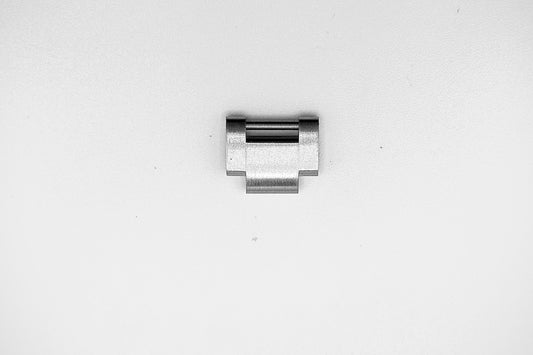
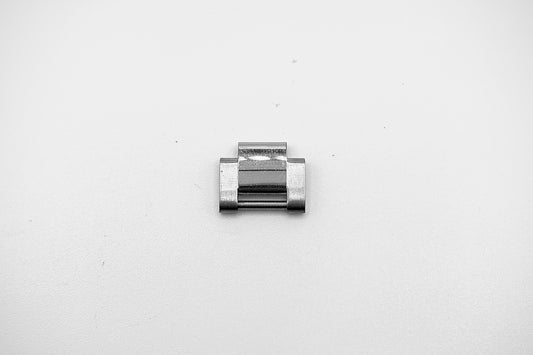
Oyster Solid Extra Link Polished Sides for Rolex
Regular price $75.94 USDRegular priceUnit price per -
Oyster Folded Final Half Link Long Tube for Rolex 9315
Regular price $149.58 USDRegular priceUnit price per -
Oyster Bracelet Hollow Links Reference 78390 for Rolex
Regular price $389.13 USDRegular priceUnit price per -
Oyster Bracelet 93150 with 585 End Links for Rolex
Regular price $426.16 USDRegular priceUnit price per -
Oyster Bracelet 7836 with 280 End Links for Rolex
Regular price $917.52 USDRegular priceUnit price per -
Oyster Solid Extra Link Polished Center for Rolex
Regular price $75.94 USDRegular priceUnit price per -
Oyster Folded Final Half Link Short Tube for Rolex 9315
Regular price $149.58 USDRegular priceUnit price per -
Oyster Folded Final Half Link Short Tube for Rolex 7836
Regular price $149.58 USDRegular priceUnit price per -
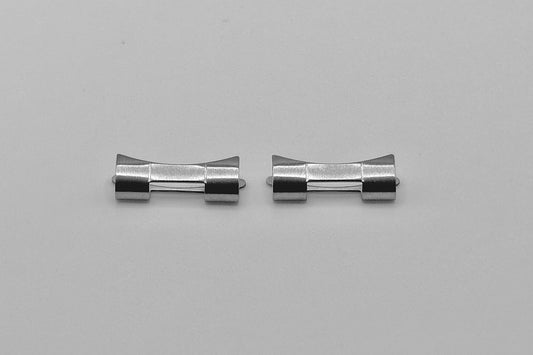
Oyster Final Half Link Short Tube for Rolex 78390
Regular price $80.55 USDRegular priceUnit price per
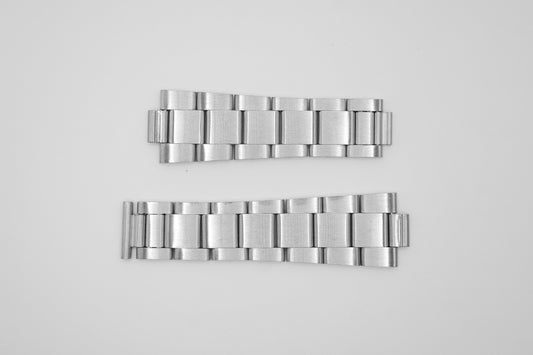
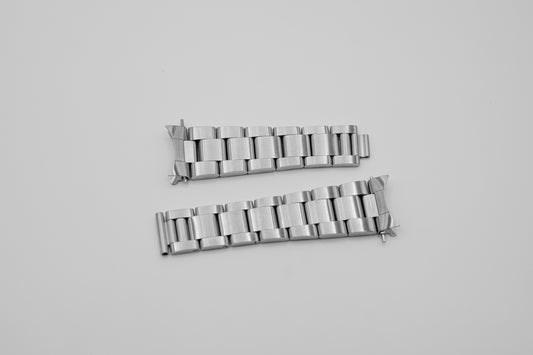
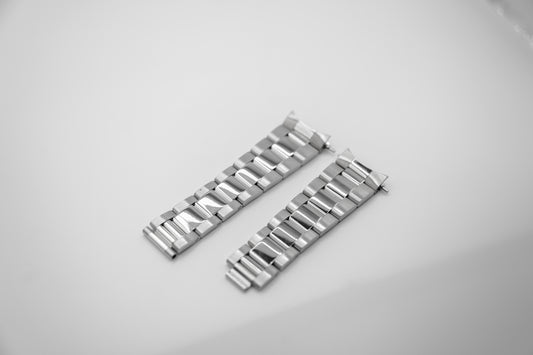
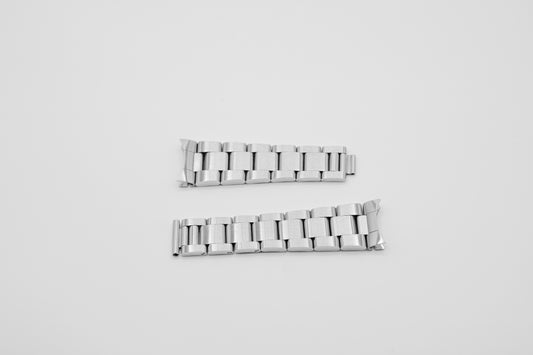



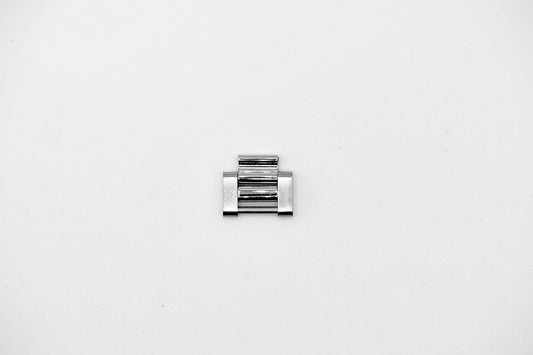
Learn more about “Rolex Oyster Bracelets”
Rolex Oyster Bracelet
Premium Aftermarket Replacement Bracelets & Components
Restoring vintage Rolex sport watches requires period-correct replacement components manufactured to exacting specifications. Oysters Jubilee manufactures new aftermarket Oyster bracelets precision machined to era-specific specifications, including folded-link 7206 and hollow-link 78350, 78360, 78390, and 78790 assemblies. Our manufacturing process ensures exact compatibility with Submariner, GMT-Master, Explorer, and Daytona references while delivering components that match historical construction methods for accurate restoration projects.
Why Collectors Choose Oysters Jubilee for Oyster Bracelets
Comprehensive Aftermarket Oyster Bracelet Product Line
Oysters Jubilee manufactures aftermarket bracelets spanning folded-link 7206 references through hollow-link 78350, 78360, 78390, and 78790 constructions. Every bracelet component is precision machined to period-correct specifications confirming reference numbers, construction methods, and era-specific dimensions before listing.
Era-Specific Construction Expertise
Our manufacturing process replicates folded-link 7206 bracelets and hollow-link 78350, 78360, and 78390 assemblies across decades of production specifications. This expertise ensures collectors receive bracelets matching specific reference requirements for 1950s through 1990s Rolex sport watches.
Manufactured Reference-Matched End Link Components
Beyond complete bracelets, Oysters Jubilee manufactures period-correct end links including 271, 280, 501B, 503, 558B, 571, and 580 references. Each end link is precision machined to match specific case specifications, ensuring proper fitment between bracelet and vintage sport watch cases.
Direct Manufacturer Pricing
Collectors access direct manufacturer pricing reflecting reference specifications and production complexity. Our transparent pricing eliminates dealer markup when sourcing aftermarket Oyster bracelets for restoration projects.
Complete Technical Documentation
Each product listing includes detailed reference information, compatibility specifications, clasp details, and measurement data. Collectors receive comprehensive documentation supporting specification compliance and ensuring proper fitment.
Learn More About Us
Understanding the Rolex Oyster Bracelet Design
The Oyster bracelet constitutes Rolex's foundational sport design, featuring three-link construction balancing durability against weight. Introduced during the 1930s alongside waterproof Oyster cases, this architecture became synonymous with professional diving watches and expedition timepieces. Oyster bracelets employ wider center links flanked by smaller outer links, prioritizing secure wrist retention and corrosion resistance.
Oyster Bracelet Construction Evolution Through Rolex References
Folded-Link Era - Reference 7206
Early Oyster bracelets employed folded sheet metal construction creating hollow links through precision stamping. Reference 7206 bracelets, common on 1950s through 1970s Submariner and GMT-Master references, delivered substantial wrist presence despite lightweight construction. Links featured visible seam lines distinguishing vintage construction from later hollow-link methods developed during the 1970s.
Hollow-Link Development - References 78350, 78360, 78390
Rolex transitioned toward hollow-link construction during the 1970s, eliminating seam lines through improved manufacturing. Reference 78350 became standard on Submariner 16800, GMT-Master 16750, and Explorer II 16550 throughout the 1980s and 1990s. The 78350 paired with flip-lock clasps featuring micro-adjustment systems for quick sizing over wetsuit sleeves.
Reference 78360 expanded hollow construction toward wider center links for Sea-Dweller 16660, supporting glide-lock extension systems. Reference 78390 appeared on two-tone Rolesor configurations, while 78790 served specific Submariner and GMT-Master applications through the 1990s.
Modern Solid-Link Evolution - Historical Context
During the late 1990s, Rolex introduced solid-link construction through machined metal architecture, transitioning away from hollow-link designs. These later references delivered increased durability through solid end links and precision-machined interfaces. Collectors seeking components for modern Rolex references should verify compatibility, as Oysters Jubilee specializes in manufacturing new aftermarket bracelets replicating vintage folded and hollow-link era specifications from the 1950s through 1990s.
Oyster Bracelet Compatibility Across Rolex Sport References
Determining correct compatibility requires understanding end link specifications, lug width measurements, and reference-specific variations. Oysters Jubilee maintains comprehensive compatibility documentation supporting accurate selection.
Key compatibility factors include:
- End link reference numbers matching case requirements
- Lug width measurements - typically 20mm across sport references
- Clasp mechanism type - flip-lock, glide-lock, or deployant
- Link construction era - folded or hollow matching production period
- Material specifications - stainless steel, two-tone, or gold
How to Identify Your Required Oyster Bracelet Reference
Period-correct Oyster bracelets feature stamped reference numbers between lugs at 12 o'clock position. Remove the bracelet and examine where end links attach - the reference number appears stamped into metal, typically reading 7206, 78350, 78360, or similar codes.
Case reference numbers stamped between lugs at 6 o'clock provide additional verification. Cross-reference your case number against compatibility charts to confirm appropriate references for your Submariner, GMT-Master, Explorer, or Daytona model.
Oyster Bracelet Reference Examples by Model Application
Submariner References:
- Reference 7206 - Vintage Submariner 5512, 5513, 1680 (folded-link)
- Reference 78350 - Submariner 16800, 168000 (hollow-link)
- Reference 78360 - Submariner Date 16610 specific applications (hollow-link)
GMT-Master References:
- Reference 7206 - Vintage GMT-Master 1675, 16750 (folded-link)
- Reference 78360 - GMT-Master II 16710 (hollow-link upgraded clasp)
- Reference 78790 - GMT-Master II 16710 specific applications (hollow-link)
Explorer & Explorer II References:
- Reference 78350 - Explorer II 16550 (hollow-link polar dial era)
- Reference 78360 - Explorer II 16570 specific applications (hollow-link)
Daytona References:
- Reference 78350 - Daytona 16520 Zenith-powered era (hollow-link)
- Reference 78390 - Daytona 16520 two-tone applications (hollow-link)
View Our Complete Oyster Bracelet Compatibility Chart
Material Variations in Rolex Oyster Bracelet Construction
Rolex manufactured Oyster bracelets across multiple material specifications. Stainless steel represents standard sport configuration, delivering corrosion resistance for diving, aviation, and exploration applications.
Two-Tone and Precious Metal Oyster Configurations
Two-tone Oyster bracelets combine stainless outer links with 18k yellow or white gold center links, creating Rolesor configurations matching two-tone Submariner Date and GMT-Master II references. Solid gold appeared on precious metal sport references, though less commonly given utilitarian focus. Material selection impacts weight, patina development, and value retention, with collectors preferring matching materials to era-correct specifications for restoration accuracy.
Oyster Bracelet Applications Across Rolex Sport Watch Models
Oyster Bracelets for Rolex Submariner
Oyster bracelets became standard on Submariner references beginning with 6204 and 6205 during the 1950s. Three-link construction supported dive requirements for underwater security, while flip-lock and glide-lock clasps enabled adjustment over wetsuit sleeves. Reference 7206 paired with vintage Submariner 5512, 5513, and 1680, transitioning to 78350 on Submariner 16800 and 78360 on specific 16610 applications.
Oyster Bracelets for Rolex Sea-Dweller
Sea-Dweller references employed reinforced Oyster bracelets with upgraded clasp systems for saturation depths. Reference 78360 paired with Sea-Dweller 16660, incorporating glide-lock extension systems for decompression operations under extreme underwater conditions.
Oyster Bracelets for Rolex GMT-Master
GMT-Master references received Oyster bracelets supporting pilot requirements for durability. Reference 7206 appeared on vintage GMT-Master 1675, transitioning to 78360 and 78790 on GMT-Master II 16710, with two-tone Rolesor configurations available on precious metal references.
Oyster Bracelets for Rolex Explorer
Explorer models employed Oyster bracelets reflecting expedition heritage. Vintage Explorer 1016 utilized 7206 folded-link construction, while later references transitioned to hollow-link assemblies maintaining robust three-link architecture.
Oyster Bracelets for Rolex Explorer II
Reference 78350 hollow-link bracelets became standard on Explorer II 16550 polar models. Later Explorer II 16570 utilized 78360 references, delivering enhanced durability for cave exploration and speleological applications.
Oyster Bracelets for Rolex Daytona
Oyster bracelets replaced leather straps on Daytona during automatic movement transition. Reference 78350 appeared on Zenith-powered Daytona 16520, while 78390 served two-tone configurations through the 1990s.
Oyster vs Jubilee - Understanding Bracelet Design Philosophy
Oyster and Jubilee bracelets serve distinct purposes. Oyster prioritizes sport durability through three-link construction and robust clasps, while Jubilee emphasizes refined aesthetics through five-link architecture. Sport applications favor Oyster - Submariner, GMT-Master, and Explorer traditionally shipped with Oyster supporting professional requirements, while Datejust offered both options for versatility.
Installing & Maintaining Rolex Oyster Bracelets
Professional Installation Recommended
Period-correct Oyster bracelets require careful installation preventing damage to era-accurate end links and spring bar systems. Professional watchmakers possess proper tools including spring bar compressors and alignment fixtures, ensuring secure attachment without scratching lugs.
Hollow-link bracelets feature specific end link tolerances requiring precise alignment. Improper insertion can damage interface surfaces or lug holes, necessitating professional expertise.
DIY Sizing & Maintenance
- Link removal for sizing requires appropriate screwdrivers and pin-removal tools
- Oyster bracelets employ screwed or pinned constructions depending on reference
- Hollow-link bracelets feature specific screw types requiring precision sizes
- Regular cleaning with mild soap prevents dirt accumulation
- Avoid ultrasonic cleaning on folded-link constructions
Explore Related Collections for Complete Bracelet Solutions
Jubilee Bracelets
Discover premium aftermarket Rolex Jubilee bracelets featuring elegant five-link construction suitable for Datejust, GMT-Master, and transitional sport references. Our manufactured product line spans vintage folded-link through hollow-link constructions.
End Links
Source period-correct end links manufactured to match your bracelet reference specifications. Our product line includes components for 7206, 78350, 78360, and 78390 bracelets, ensuring proper case interface for vintage Rolex sport watches.
Browse End Links for Oyster Bracelets
Extra Links
Add extra links to your Oyster bracelet for optimal wrist fit. We manufacture components across folded and hollow construction eras, enabling precise sizing without compromising period-correct specifications.
Find Extra Links for Your Bracelet
Spring Bars
Secure your Oyster bracelet with correct-specification spring bars matching Rolex factory standards. Our selection includes shouldered and non-shouldered variations, appropriate diameters for vintage references.
Find Your Premium Aftermarket Oyster Bracelet Today
Whether restoring a vintage Submariner with period-correct 7206 construction or sourcing hollow-link 78350 components for GMT-Master II references, Oysters Jubilee manufactures comprehensive aftermarket bracelets supporting your requirements. Our precision manufacturing expertise and commitment to era-accurate specifications ensure collectors receive premium Oyster bracelets matching factory standards. Browse our collection to discover period-correct references and replacement components for your restoration project.