
End Links for Rolex and Tudor
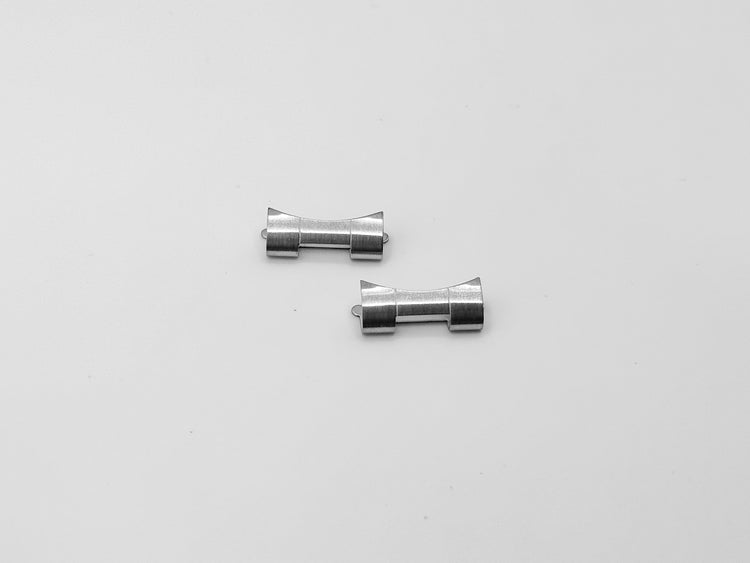


Oyster 580 End Links for Rolex
$138.08

Oyster 571 End Links for Rolex
$138.08

Jubilee 502B End Links for Rolex
$115.06

Oyster 380 End Links for Rolex
$138.08

Jubilee 555B End Links for Rolex
$101.26

Oyster 501B End Links for Rolex
$101.26

Oyster 271 End Links for Rolex
$138.08

Oyster 503 End Links for Rolex
$101.26

Oyster 280 End Links for Rolex
$138.08

Jubilee 550 End Links for Rolex
$138.08

Oyster 380B End Links for Tudor
$161.09

Jubilee 502T End Links for Rolex
$138.08

Oyster 585 End Links for Rolex
$115.06

Oyster 558B End Links for Rolex
$101.26

Oyster 503B End Links for Rolex
$115.06

Oyster 71 End Links for Rolex
$138.08


Learn more about “End Links for Rolex and Tudor”
Premium Aftermarket End Links for Period-Correct Restoration
Rolex End Links
Oysters Jubilee manufactures premium aftermarket end links compatible with vintage Rolex and Tudor watches from the 1950s through 1990s production eras. Our new components are precision machined to era-correct specifications, replicating period-appropriate construction methods while delivering reliable fitment for professional restoration projects. End links represent the critical connection between case and bracelet, requiring precision engineering in reference code accuracy, dimensional tolerances, and construction methodology matching specific production periods. We specialize in manufacturing bracelet components spanning riveted designs from the 1950s through hollow link constructions from the 1990s.
Why Watch Enthusiasts Choose Oysters Jubilee for Rolex Restoration Components
Oysters Jubilee manufactures aftermarket bracelet components using precision machining processes that replicate era-specific construction methods from vintage Rolex production periods. Our manufacturing capabilities span complete bracelet evolution across seven decades of Rolex design history, providing restoration specialists with new components engineered for period-correct builds.
Reference Code Compatibility Across Production Eras
We manufacture end links featuring period-correct reference codes matching vintage Rolex specifications, ensuring proper compatibility verification for restoration projects. Our precision machining replicates dimensional standards from original Gay Frères production specifications, providing components with accurate reference designations that match specific production eras and case configurations.
Complete Construction Era Manufacturing Range
Our product line spans riveted link bracelet components from the 1950s, folded link constructions from the 1960s through 1970s, and hollow link designs from the 1980s and 1990s. This comprehensive manufacturing range across vintage production eras enables period-correct restorations matching construction methods from specific Rolex manufacturing timeframes.
Model-Specific End Link Engineering
Each end link is manufactured to match dimensional specifications ensuring flush case fitment without gaps, with reference codes including 80, 280, 380, and 555 for earlier vintage models. Later hollow end links designated 501B, 502B, 503B, 555B, 558B, and 580 serve 1980s-1990s references, providing restoration specialists with precision components reflecting construction techniques from corresponding production decades.
Rolex and Tudor End Link Compatibility
Rolex and Tudor watches share 20mm lug width specifications across professional sports models, enabling extensive component interchangeability for restoration and customization. This dimensional compatibility extends to end links, bracelets, and spring bars, providing flexible sourcing while maintaining period-correct configurations.
Model-Specific Fitment Requirements
Case thickness variations affect end link profile selection, ensuring flush fitment without gaps. Thicker Sea-Dweller cases require deeper end link profiles, while standard Submariner and GMT-Master models accept conventional depths for proper visual integration.
Key Compatibility Considerations:
- Lug width matching: All 20mm end links work across Rolex sport models including Submariner, GMT-Master, Explorer, and Sea-Dweller
- Case thickness: Thicker cases demand specific profiles preventing gaps between bracelet and case flanks
- Brand crossover: Many Tudor models accept Rolex end links and bracelets due to shared dimensional standards
View Rolex Compatibility Chart
Oyster vs Jubilee Bracelet End Links - Choosing the Right Style
Both Oyster and Jubilee bracelets utilize identical end link reference codes, as end piece compatibility depends on case dimensions rather than bracelet style selection. This interchangeability allows collectors to switch between three-link Oyster and five-link Jubilee configurations on the same watch head while maintaining proper fitment and period-correct construction.
Oyster Bracelet End Links
The three-link Oyster bracelet construction delivers sportier aesthetics suited to professional dive watches, chronographs, and aviation timepieces throughout Rolex's tool watch lineup. Despite different link configurations compared to Jubilee styles, Oyster bracelets accept the same end link codes, ensuring compatibility across both bracelet families when properly matched to case specifications.
Jubilee Bracelet End Links
Five-link Jubilee bracelet construction provides a dressier appearance favored on GMT-Master references and Datejust models, offering enhanced flexibility and refined visual character. Jubilee configurations share complete end link compatibility with Oyster bracelets, allowing collectors to alternate between styles on watches originally offered with both options including GMT-Master 1675 and GMT-Master II 16710 references.
How to Identify the Correct End Links for Your Vintage Rolex or Tudor
Matching proper end link reference codes to specific watch models ensures successful restoration while preventing fitment issues that compromise appearance and structural integrity. Reference codes stamped on end link undersides provide definitive identification, enabling verification against comprehensive compatibility charts documenting period-correct configurations.
Reading End Link Reference Codes
Two-digit codes identify vintage riveted end links from the 1950s and 1960s, while three-digit codes mark folded and hollow link components from subsequent decades. Solid end link bracelets omit separate codes entirely, as integrated construction eliminates individual end piece part numbers in favor of complete bracelet reference designations.
Common End Link Codes by Model
- Submariner 5512: Reference codes 80, 280, and 580 spanning riveted through hollow link eras
- GMT-Master 1675: Codes 58, 280, 580 for Oyster bracelets plus 550 for Jubilee configurations
- Explorer 1016: End links 58 and 580 matching bracelet evolution across production decades
- Sea-Dweller 1665: Specialized codes 380 and 585 accommodating thicker case dimensions
- Daytona 6263/6265: Specific code 771 for chronograph bracelet configurations
View Complete Rolex Compatibility Chart
Installation and Fitment Best Practices
Fixed end links demand professional installation utilizing specialized tools preventing spring bar damage and ensuring proper alignment. Professional fitting protects vintage components while guaranteeing secure attachment withstanding decades of daily wear.
Professional Installation for Vintage End Links
Riveted and folded link bracelets require specialist care during installation, as improper handling risks permanent damage to delicate vintage-style components. Solid link bracelets offer user-serviceable installation with proper screwdrivers, allowing collectors to perform bracelet changes without professional assistance.
Looking for Something Else for Your Vintage Watch?
Complete restoration requires comprehensive component selection beyond end links, including complete bracelets, sizing links, and period-correct spring bars. Our manufacturing capabilities provide every component necessary for period-correct vintage Rolex and Tudor restoration projects.
Bracelets with End Links
Complete Oyster and Jubilee bracelet assemblies featuring factory-installed end links provide ready-to-install solutions for immediate restoration. Pre-assembled packages eliminate fitment guesswork and ensure period-correct end link matching.
Bracelets Only
Complete Oyster and Jubilee bracelets without end links enable custom builds where collectors source era-specific end pieces separately. Includes proper clasp configurations and period-accurate reference designations.
Extra Links
Additional links for bracelet sizing ensure proper wrist fitment and provide spare components for future adjustments. Maintains proper proportions while preventing excessive clasp extension.
Springbars
Era-correct spring bars matching period-appropriate diameter and length specifications complete professional restoration while ensuring secure bracelet attachment. Prevents improper fitment risking end link damage.
Understanding Rolex End Links and Their Critical Role
End links bridge bracelet to the case, providing structural integrity while maintaining visual continuity across the watch assembly. These precision components determine proper fitment, prevent excessive spring bar stress, and complete the integrated appearance defining professional Rolex construction from the 1950s forward.
The Evolution From Separate Components to Integrated Design
Vintage Rolex bracelets featured removable end links stamped with individual reference codes, allowing replacement throughout decades of wear. Modern solid end link designs (introduced in the 2000s) integrate directly into complete bracelet assemblies and are not available as separate components.
Fixed vs Removable End Links
Fixed end links require professional installation using specialized tools ensuring proper alignment without component damage. Removable end links allow straightforward spring bar access for user-serviceable changes, providing flexibility for collectors maintaining multiple bracelet options.
Types of Rolex End Links by Era
Understanding end link evolution across Rolex manufacturing decades enables accurate identification and appropriate component selection for period-correct vintage restoration projects. Each construction method reflects specific production technologies and design philosophies prevalent during corresponding timeframes.
Riveted End Links (1950s-1969)
Swiss bracelet manufacturer Gay Frères produced riveted end links featuring two-digit reference codes including 64, 65, 80, and 58 stamped on link undersides. These components equipped early Submariner references, GMT-Master models, and Explorer watches, establishing construction standards that defined professional sports watch bracelets throughout the 1950s and 1960s production years.
Folded End Links (1960s-1980s)
Folded link construction introduced three-digit reference codes including 258, 280, 358, 380, and 555, representing lighter-weight designs that reduced manufacturing costs while maintaining serviceability. This construction method served Rolex production through two decades, appearing on Submariner, GMT-Master, Explorer, and Sea-Dweller models during the transition from riveted to hollow link technologies.
Hollow End Links (1980s-1990s)
Hollow end link designs improved durability over folded constructions while retaining lighter weight compared to later solid implementations. Common reference codes 580, 585, and 501B identify these components, which equipped professional models through the final decades before Rolex transitioned to fully integrated solid end link construction.
Solid End Links - SEL (2000s-Present)
Solid end link construction (SEL) integrates end pieces directly into bracelet assembly, eliminating separate component codes. Introduced in the early 2000s, SEL represents Rolex's modern manufacturing standard. These integrated designs are not sold as separate components, as they form a permanent part of complete bracelet assemblies.
Rolex and Tudor Compatibility Chart Resources
Comprehensive reference charts documenting end link codes, bracelet reference numbers, and model-specific compatibility enable confident component selection for restoration projects. These detailed resources eliminate guesswork while ensuring period-correct configurations matching specifications across all production eras.
Reference Our Detailed Compatibility Charts
Our Rolex compatibility chart provides complete documentation of end link codes, bracelet references, and model applications spanning 1950s references through modern production. The Tudor compatibility chart offers parallel guidance for Tudor sport models, ensuring collectors access comprehensive compatibility data for both brands.
View Rolex Compatibility Chart | View Tudor Compatibility Chart